
Quick answer: Custom liner development is decided almost entirely by one number — the seal diameter. Every other variable (material, thickness, printing, backing) can be changed on an existing tool with modest effort, but the diameter is fixed by the cutting die. Confirm the neck finish and the effective sealing surface before the die is made, because a diameter error means a new tool, not a new drawing.
Hangzhou Xinxing Pharmaceutical Packaging has run OEM and ODM programmes since 2001, and the pattern is consistent: projects that are slow are almost never slowed by material science. They are slowed by a dimensional ambiguity that only becomes visible after tooling has been cut. This article sets out the sequence that avoids that, and the certifications and documentation that a compliant custom programme should include.
The seal diameter is the one decision that cannot be revised
A neck finish designation such as "28-410" describes a thread and closure specification. It does not describe the flat sealing surface on the rim, and it is the sealing surface that the die must match. Differences in wall thickness, rim radius and mould wear between two containers sharing the same nominal finish can shift the effective sealing area by a millimetre or more.
Before committing a die, three measurements should be confirmed:
- Outer diameter at the rim — the full extent of the sealing surface.
- Inner diameter at the opening — the bore the liner must cover without interfering with fill levels.
- Rim flat width — the annular area where the sealant film must bond. A narrow or slightly radiused rim needs a thinner sealant film and a tighter diameter tolerance than a wide flat rim.
Measuring a physical sample of the actual production container, rather than reading the finish from a closure catalogue, removes most of the risk at this stage. Where a container is supplied by a third party, confirming dimensions on a moulded part from the production tool — not a prototype — is worth the delay.
What can be customized and what it costs to change
| Variable | Customization range | Effect on tooling |
|---|---|---|
| Seal diameter | By drawing or sample | New cutting die required |
| Total thickness | Adjusted by backing layer thickness | Existing die reusable |
| Sealant film polymer | PE, PP, PET, EVA, co-extruded film | Existing die reusable |
| Foil weight | Typically 20–40 µm | Existing die reusable |
| Peel behaviour | Peelable or weld / clean peel | Existing die reusable |
| Top sheet printing | Logo, batch panel, instructions, multilingual | Print plate required |
| Backing type | Paperboard, EPE foam, PET film | Existing die reusable |
| Cap type compatibility | Standard, child-resistant, tamper-evident, dropper | Existing die reusable |
Reading the table in reverse is the practical point. Material, thickness and print changes are low-risk revisions that can be trialled on the production line without new tooling. Diameter is the only row that resets the programme.
Printing, branding and multi-market requirements
Because the top sheet is visible when the cap is removed, it is a branding surface as well as a functional layer. Common custom requirements include:
- Brand logo or wordmark on the foil surface, either plain or in a registered colour.
- Batch and expiry panel space, where the liner is used as a secondary identification surface.
- Multilingual or pictorial instructions for regulated markets where the container label is space-limited.
- Embossed or relief effect where a tactile brand cue is wanted and print registration is difficult on a curved surface.
Where a product ships to multiple markets with different labelling requirements, printing a market identifier on the liner allows a single container to serve several destinations. This is a specification that must be built into the die and print plate stage; it cannot be added afterwards.
Certification and documentation for regulated markets
A custom liner programme for pharmaceutical or food-contact use carries a documentation obligation that sits alongside the product specification. The two most common requirements are material compliance documentation for food contact or pharmaceutical use, and a migration or extractables assessment where the product is a solvent or an oil.
A custom programme should define at the outset:
| Requirement | When it applies | What must be agreed before sampling |
|---|---|---|
| Food-contact material declaration | Any liner touching a food or beverage product | Which regulatory framework the declaration must reference |
| Migration / extractables data | Oily, alcoholic or solvent-based products | Test conditions and the acceptable limit |
| GMP-compliant manufacturing | Pharmaceutical and medical applications | Whether a cleanroom-manufactured liner is required |
| Certificate of analysis per batch | Regulated supply chains | Which properties the certificate must report |
| Change control notification | Approved products in long-term supply | Notification period and approval route for formulation changes |
The final row is the one most often omitted at the sampling stage and most disruptive later. A liner that is approved on a sample and then changes formulation without notice forces the customer to revalidate a product that was already released to market. Agreeing the change control process during the sampling stage costs nothing and prevents that situation entirely.
The OEM/ODM process, in order
The sequence below is the one we follow for custom programmes, and it exists mainly to keep the diameter decision last rather than first:
- Requirements and container data. Container material, neck finish, rim dimensions from a production sample, product chemistry, process temperature, closure type.
- Liner type selection. Induction, hot melt adhesive, foam or pressure sensitive, decided by the filling line and the opening experience required.
- Layer stack specification. Sealant film, foil weight, release layer, backing, total thickness, peel behaviour.
- Print and branding artwork. Logo, panels, market identifiers, registered colours.
- Compliance documentation. Material declarations, migration requirements, GMP status, CoA scope, change control terms.
- Sampling. Typically 3–7 days depending on the complexity of the stack and the print requirement.
- Line trial and approval. Sealing parameters validated on the customer's own filling equipment, not on ours.
- Production and multi-stage inspection. Bulk orders generally 15–30 days, subject to material availability and season.
- Logistics. EXW, FOB, CIF or DDP, with Shanghai, Ningbo and Shenzhen as the principal loading ports.
Step seven is not a formality. Because sealing performance depends on the induction settings, the capping torque and the line speed, a liner approved only by bench test has not been approved at all. Sending samples for a trial run on the customer's own line is the only way to close the loop.
Frequently asked questions
Can you manufacture to my drawing?
Yes. Custom manufacture from a drawing or a physical sample of the liner or closure is our standard OEM service. For ODM projects we can also propose the layer stack from the container data and the application requirements.
What is the minimum order for a custom liner?
It depends on the die and print requirements. A custom diameter requires a dedicated cutting die, so the first order carries the tooling. Orders on an existing diameter with a material or thickness change have a much lower threshold. Send us the specification and annual volume and we will confirm.
How long does a custom sample take?
Typically 3–7 days, depending on the complexity of the layer stack and whether custom printing is involved. Dies or print plates that must be made first will extend this.
Can the liner be printed with our logo?
Yes. Logo printing, batch and expiry panels, multilingual text and market identifiers can all be printed on the top sheet. Artwork should be finalised before the print plate is made.
Do you provide certification for export markets?
We manufacture to GMP and QS standards and can supply ISO, CE, RoHS and other certifications on request, along with material declarations and batch certificates of analysis. Tell us which market and which regulatory framework applies so the documentation matches the requirement.
Send the container, not just the finish code
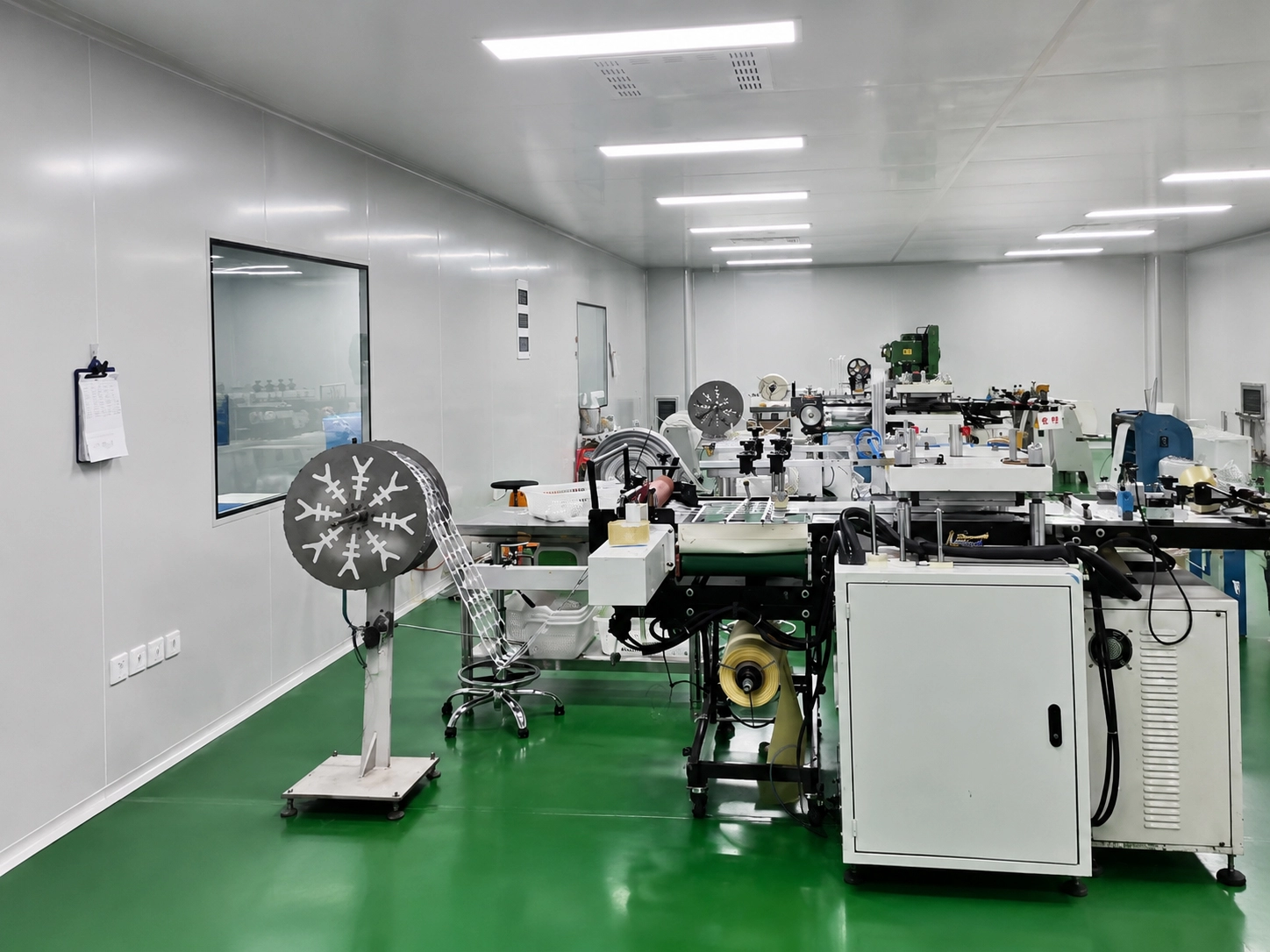
Hangzhou Xinxing Pharmaceutical Packaging is a national high-tech enterprise and a Zhejiang provincial technology-based SME, manufacturing sealing liners in a 100,000-class cleanroom in Tonglu, Hangzhou since 2001. For custom programmes, send us a production sample of the container, the product chemistry, the process temperature and the required certification scope. We will confirm the layer stack and start sampling, generally within 3–7 days.