
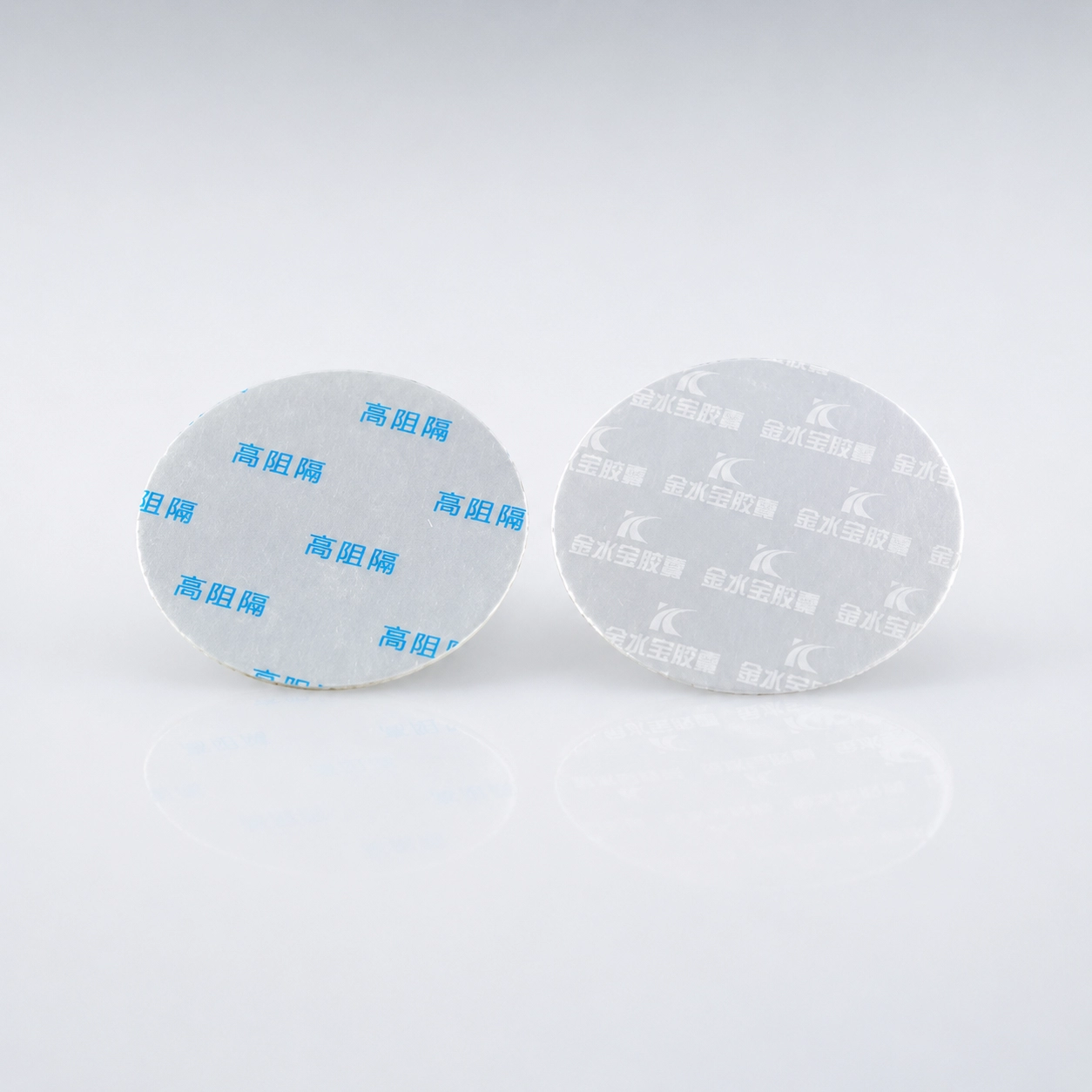
Quick answer: A straightforward custom liner programme — one new diameter, standard construction, no printing — runs roughly six to eight weeks from confirmed dimensions to first commercial shipment. Adding printing adds two to three weeks, almost all of it in artwork approval. Adding a regulated market declaration can add three to four weeks on top. The slippage in real projects is rarely manufacturing; it is the customer's own container measurement, their artwork rounds, and their line trial scheduling.
Hangzhou Xinxing Pharmaceutical Packaging has run OEM and ODM liner programmes since 2001. What follows is the schedule we now quote as a realistic baseline, broken into phases, with the specific decision that gates each one. It is written for a procurement or packaging engineer who needs to plan backwards from a launch date.
Phase 1 — Dimensioning (week 1)
What happens. The sealing land geometry is measured on production-moulded containers, the product is characterised for aggressiveness, the filling line is characterised for speed and available sealing equipment, and the liner construction is selected.
What we need from you. Six to ten containers from the production mould, not from a prototype or a design studio model. The product formulation or at least its carrier type, pH and any solvent content. The line speed range and the induction sealer make and model.
Where it slips. Containers that arrive from a pilot tool. A pilot cavity and a production cavity can differ in wall thickness at the rim by enough to change the required diameter. If the production tool is not yet cut, the dimension is provisional and everything downstream inherits the uncertainty.
Phase 2 — Tooling and first samples (weeks 2–3)
What happens. The cutting die is produced to the confirmed diameter, liner discs are cut from the selected laminate, and a first sample set is assembled in the specified construction.
What you receive. A sample pack with liners at the nominal diameter plus, where the measurement was ambiguous, a small set at the neighbouring tolerance so you can confirm the fit on real containers rather than on a drawing.
Where it slips. Die lead time is short, but the decision gate is not: a sample set sent without a clear instruction about which diameter to test on which container produces a week of internal debate rather than an answer. Nominate one person to own the fit decision and give them the containers to make it with.
Phase 3 — Sealing qualification on your line (weeks 3–5)
What happens. The liner is run on the actual filling line at the actual line speed and power setting, containers are tested for seal integrity, and a sealing window is established.
This is the phase that decides the project. A liner that passes a bench test and fails on the line has not failed — it has not yet been tested. The output of this phase should be a documented window: the minimum power, the maximum line speed, and the cap torque range within which the seal is reliable. That window belongs on the line's setup sheet, not in a project folder.
Where it slips. Line time. A qualification run needs a clean window on a production line, and production lines are busy. Book the slot at the start of the programme rather than when samples are ready — this single piece of scheduling accounts for more lost weeks than any manufacturing delay.
Phase 4 — Compliance documentation (weeks 4–6, parallel)
What happens. The documentation package is assembled for the destination market: certificate of analysis, material declarations, food-contact or pharmaceutical-contact compliance statements, migration or extractables testing where required, and the batch retention policy.
Where it slips. Testing lead times at external laboratories. Migration testing in particular is not a fast process, and it cannot be compressed by asking. Where the launch date depends on a declaration that requires external testing, the decision to test should be taken in week one, not when the packaging is otherwise ready.
One caution. Declarations are jurisdiction-specific. A European compliance statement does not automatically satisfy a US, Gulf or ASEAN buyer without additional work, and the gap is commonly discovered at the documentation review rather than at the enquiry.
Phase 5 — Printing, where specified (weeks 5–8)
What happens. Artwork is separated, plates are made, a proof on the actual stock is approved, and the printed liner enters the production run.
Where it slips. Artwork rounds. In our experience this is the single largest source of delay in a private label programme, and it is almost entirely within the customer's control. Artwork designed against the printable diameter rather than against a carton, with all elements inside a bleed margin and no text below roughly 4 pt, typically clears in one round instead of three.
Proof on real stock. A digital proof on white paper will not show how ink behaves on an uncoated board ground. Approve on the actual substrate, or expect a colour discussion after the run.
Phase 6 — First commercial production (weeks 7–9)
What happens. Material is allocated, the run is produced, in-process checks are recorded for die-cut diameter and sealant film thickness, and the batch is packed for shipment.
What you should ask for. The in-process record, not just the certificate of analysis. The two numbers that predict batch-to-batch consistency are die-cut diameter and sealant film thickness; a supplier who measures both in-process and states the acceptance band is controlling the variables that actually matter.
The schedule, compressed
Standard diameter, standard construction, no printing: one to two weeks, because the die exists and no artwork is involved.
New diameter, standard construction, no printing: six to eight weeks as set out above, of which roughly three weeks is customer-side activity — container measurement, fit approval and line time.
New diameter with printing: add two to three weeks, predominantly artwork.
New diameter, printing, regulated market with migration testing: add three to four weeks for external laboratory time, running in parallel from week one if it is planned properly.
What a buyer can do to protect the date
Three decisions, all made early, remove most of the schedule risk. Nominate a single owner for the dimensional sign-off. Book the line qualification slot before samples exist. Start the compliance testing conversation at enquiry stage rather than at documentation stage. Everything else in the programme — tooling, cutting, assembly, packing — is on a predictable clock that we control.